
Originally published on HKU ESG Blog. This post has been republished here with permission.
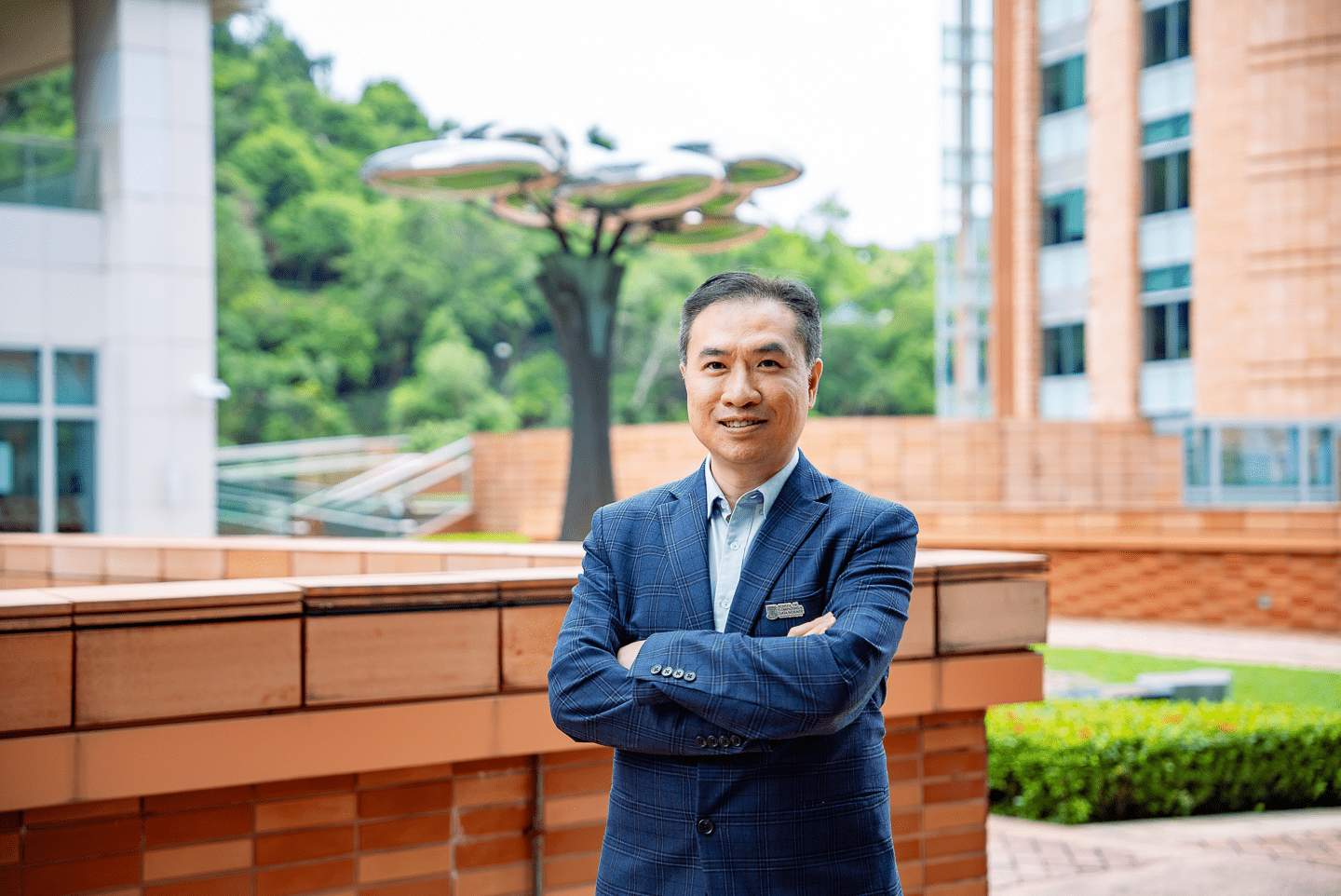
Professor Reynold CK Cheng is the Head of the AI & Data Science Division at the University of Hong Kong, an Association for Computing Machinery (ACM) Distinguished Member, and was listed as an “AI 2000 Most Influential Scholar” in 2023, 2024, and 2025.
He’s also a leader in bridging AI and real world impact. Now he’s working on a time-banking project, HINCare, that promises to leverage AI to better the lives of elders.
We asked Professor Cheng about HINCare, AI’s potential for social good, and his vision for the future.
What is HINCare? What inspired you to launch it?
HIN stands for heterogenous information network. Basically, it’s a project where we use AI to both match volunteers with people in need and train them.
It’s based on my research dating back more than 10 years, to 2015. At the time, I was working on HIN-based recommender systems for e-commerce platforms. Then, in 2018, I had the chance to collaborate with a friend and apply for a government grant for smart-tools for the elderly.
That led to a collaboration with an NGO in 2019. That organisation is a pioneer in the field of time banking, where volunteers can earn time credits for working with people in need of help. Then this time credit can be applied later to services or gifts from the NGO.
In essence, it means you’re not volunteering for nothing. There are incentives. The idea has been around for a while, but Hong Kong is just catching up.
How does HINCare improve the services offered by NGOs?
When we started working on this, our partners didn’t have any technology. Everything was done on pen and paper.
They also had limited reach. The organisations were working in communities, but usually the communities were the size of a single building, right?
So they were very interested in the possibilities technology offered, and they asked us to develop an app that both elders and volunteers could use, with the former able to request services based on their needs.
It was really a two-part project. The first was time banking. So I used what I had learned working on recommendation algorithms and tried to marry the technology and need.
Interestingly, it turned out that a lot of the volunteers were so-called young olds. Think retired teachers in their early 60s. And they were very eager to get involved. So we developed a second app for them.
Think about it: If every time someone invites you to support a time bank, you need to download a separate app and register from scratch, it’s quite difficult.
That led us back to the drawing board, where we wanted to make it easier for volunteers to get involved. We started with just two organisations, both oriented toward the elderly. But now we’re working with more than 20 diverse NGOs. Not just elderly centres, but also associations for non-locals. That led to a bilingual version and some new accessibility functions.
What was the development process like? Any challenges?
Developing apps for the social care sector isn’t like working with commercial clients. The users and partners alike are not technically trained. They don’t really understand the software development process and aren’t practiced at expressing what they need.
So we needed to go through several trials. It took patience. This was not an app that could be developed in a day. I think the main thing I took away from the experience was the importance of communication. We needed to learn how to understand issues from their point of view. It wasn’t just about making the time banking work, we needed to think about how elders would interact with the app.
It’s a matter of empathy. We tried to consider: How would we use this app if our fine motor skills were impaired, for example? Sometimes a person’s needs are invisible. We needed to get around that.
Any plans to expand the app elsewhere, such as the Greater Bay Area?
Yeah, that’s a long-term dream. We’d like to see our experiments in Hong Kong repeated, to have success elsewhere.
Time banking isn’t new, but I do think we’re the first in the world to build such a large platform, with a subscription model that’s easy to join.
But our top goal is to work more closely with the Hong Kong government. How can we use our work to help the government deliver important services and information? Once we figure that out we can move forward.